Quick answer
If you feel unwell while visiting Geneva, start with a pharmacy for minor problems, a medical centre or doctor for something that needs an examination, and emergency services for anything serious.
For a life-threatening emergency, call 144 for an ambulance or 112 for the European emergency number. For urgent but non-life-threatening medical advice, call Centrale Santé Genève on 0800 116 117. This free, 24/7 service assesses symptoms and directs you to the right care.
For medicine, advice, minor symptoms or a lost prescription, visit a pharmacie. Geneva has many pharmacies, including duty pharmacies for evenings, weekends and public holidays.
What to do if you feel unwell in Geneva
Being ill in a city you do not know is stressful. The simple route is:
- Minor health issue: start at a pharmacy.
- Needs a doctor or examination: use a medical centre, clinic or appointment platform.
- Urgent but not life-threatening: call 0800 116 117.
- Serious symptoms or immediate danger: call 144 or 112.
Hospital emergency departments are there when you need them, but many common visitor problems can be dealt with faster by a pharmacy, doctor or medical centre.
When to go to a pharmacy in Geneva
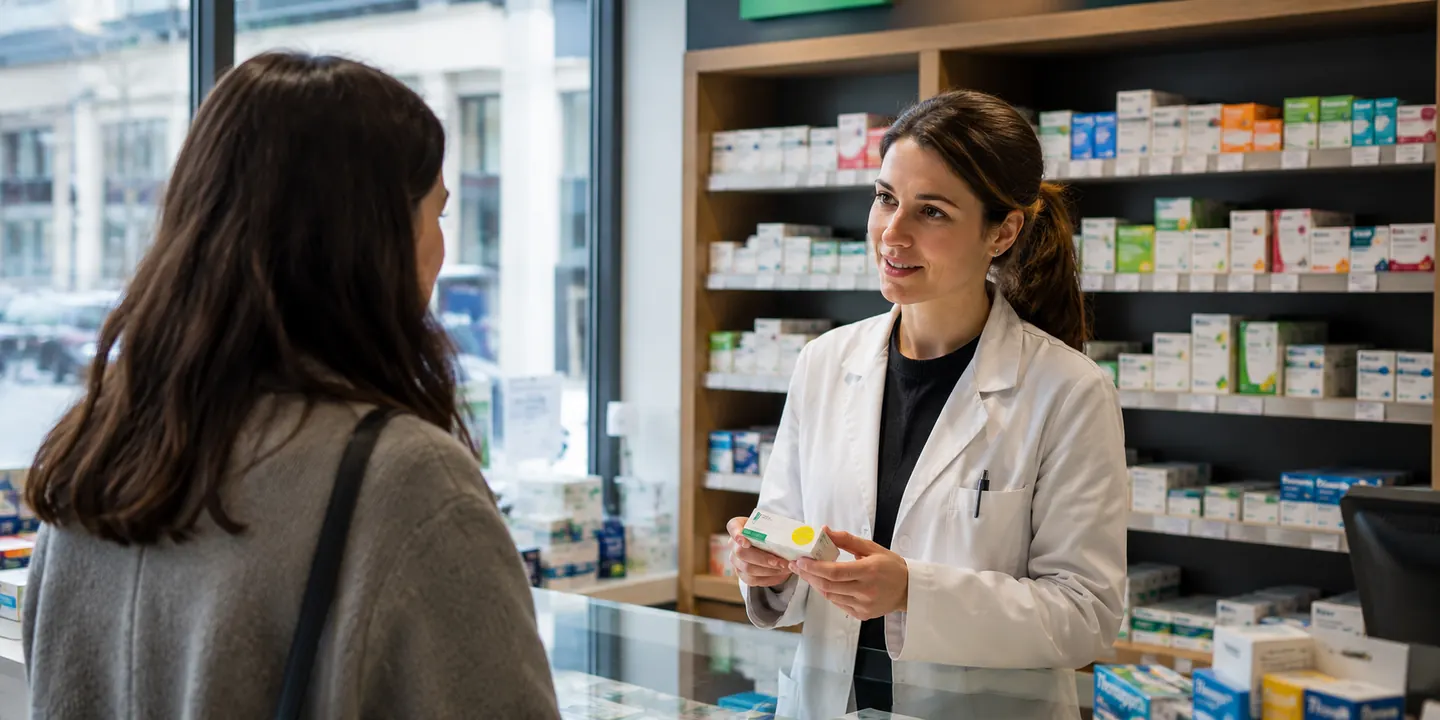
A pharmacy is often the best first stop for visitors. Go if you need help with a cold or flu, sore throat, stomach upset, minor eye irritation, skin reaction, travel sickness, pain relief, allergies, insect bites, basic wound care, a forgotten medicine or an over-the-counter treatment.
Pharmacists in Geneva are trained healthcare professionals. They can advise you, suggest treatment, explain how to use medication and tell you if you need a doctor instead. Look for the green pharmacy cross or the word Pharmacie.
Many central pharmacies, particularly around Cornavin, the airport and international areas, can help in English. Keep things simple: show the medication box, prescription, a photo or the generic medicine name. If English is limited, use a translation app.
For a useful first stop near the main station, see our Cornavin essentials guide. To browse English-friendly health and dental listings, use the health and dental category.
Medicine outside normal opening hours
Geneva has a duty-pharmacy system for evenings, weekends and public holidays. Search for pharmacie de garde Genève, check the opening hours before travelling and call first if it is late at night. Do not assume every pharmacy is open on Sunday.
If you have lost or forgotten important medication, deal with it early in the day. Bring or show your prescription, a photo of the box, the generic name, dosage, doctor’s details, travel-insurance information and passport or ID. A pharmacy may not be able to replace every medicine without a valid prescription, especially controlled medicines, but it can explain what is possible and where to go next.
How to see a doctor in Geneva as a visitor
Choose a doctor, walk-in medical centre or urgent-care clinic if your problem needs an examination: for example, a fever that is not improving, a painful ear infection, a suspected urinary infection, a worsening throat infection, a minor injury, a spreading rash or a prescription that cannot be replaced by a pharmacy.
Online appointment platforms such as OneDoc can help you look for available appointments. You can also ask a pharmacy, hotel reception or travel-insurance provider where to go. If you are unsure whether emergency care is needed, call 0800 116 117 rather than guessing.
Medical help at Geneva Airport
If you feel unwell at Geneva Airport, its medical centre provides first aid, paramedical advice and guidance for passengers. It is not a doctor’s office and cannot issue normal consultations, certificates or prescriptions.
There is no pharmacy in the transit area, so buy any medicine before security control. If you are still working out how to reach the city, read the Geneva Airport arrival guide.
When to call emergency services
Call 144 for a medical emergency or ambulance. Call 112 if you are unsure which emergency service you need. For suspected poisoning, call 145 for Tox Info Suisse; if the person is unconscious, struggling to breathe or in immediate danger, call 144 first.
Call emergency services for chest pain, difficulty breathing, signs of stroke, loss of consciousness, a severe allergic reaction, serious injury, heavy bleeding, severe burns, seizures, suspected poisoning or any situation where someone may be in immediate danger.
Geneva’s main public hospital system is HUG, the Geneva University Hospitals. If a situation is urgent but not life-threatening, calling Centrale Santé Genève first may be faster and more appropriate; it can direct you to the right care.
For tooth pain, swelling or a dental injury, browse English-speaking dentists in Geneva and read our dental and emergency help guide instead of trying to decide from a general medical listing.
What about children?
If a child is seriously ill, injured, struggling to breathe, unconscious or in immediate danger, call 144. For an urgent but non-life-threatening problem, call 0800 116 117 or ask a pharmacist, hotel or travel-insurance provider for guidance. Do not guess with children’s medication doses.
What to bring when getting medical help
Take your passport or ID, travel-insurance details, European Health Insurance Card if relevant, a list of current medications, photos of medication boxes, allergy information, a doctor’s letter or prescription, a payment card and your accommodation address. For children, keep vaccination or medical details handy if relevant.
Cost and insurance
Swiss healthcare is high quality, but it can be expensive for visitors. Check what your health card or insurance covers before travelling; you may still need to pay some costs. For a non-urgent problem, contact your travel-insurance provider before choosing a clinic if you can. In a true emergency, get help first and deal with insurance later.
Useful French words
- Pharmacie - pharmacy
- Médecin - doctor
- Urgences - emergency department
- Hôpital - hospital
- Ordonnance - prescription
- Médicament - medicine
- Douleur - pain
- Fièvre - fever
- Allergie - allergy
- De garde - on duty / out of hours
First-time visitor tips
- Save 144, 112, 145 and 0800 116 117 before your trip.
- Take photos of regular medication boxes before travelling.
- Keep travel-insurance details somewhere easy to find.
- Do not leave replacing important medication until Sunday evening.
Useful next steps in Geneva
- Browse English-friendly health and dental services when you need a clinic or practitioner.
- Open the Geneva map to find nearby practical places.
- Read the Airport arrival guide if you are still at or travelling from the airport.
Frequently asked questions
Where can I find a pharmacy in Geneva?
Look for the green cross or the word Pharmacie. There are many pharmacies in central areas, around Cornavin station, the airport, shopping streets and residential neighbourhoods.
Are pharmacies open on Sundays in Geneva?
Some are, but many are closed. Search for pharmacie de garde Genève to find the duty pharmacy or another late-opening option, and check before you travel.
Can tourists see a doctor in Geneva?
Yes. Visitors can use doctors, clinics, medical centres and hospital emergency services. Take ID, insurance details and payment information.
What emergency number should I call in Geneva?
For a medical emergency or ambulance, call 144. The general European emergency number is 112. For poisoning, call 145.
What should I do if I need urgent help but it is not life-threatening?
Call Centrale Santé Genève on 0800 116 117. It is a free, 24/7 service that assesses symptoms and directs you to appropriate care in Geneva.
Can I get antibiotics from a pharmacy in Geneva?
Not usually without a prescription. A pharmacist can advise you, but antibiotics generally require a doctor’s prescription.
Can I use a foreign prescription in Geneva?
A pharmacy can look at it and advise you, but not every foreign prescription can be filled directly in Switzerland. Bring the prescription, medicine box, dosage details and your doctor’s contact information.
Do Geneva pharmacies speak English?
Some do, particularly in central and international areas, but it is not guaranteed. Bring written medication details, use simple English and use a translation app if needed.
The simple version
For minor problems, start at a pharmacy. For urgent but non-life-threatening help, call 0800 116 117. For a serious medical emergency, call 144 or 112. Geneva has good medical care; the key is choosing the right door first.