
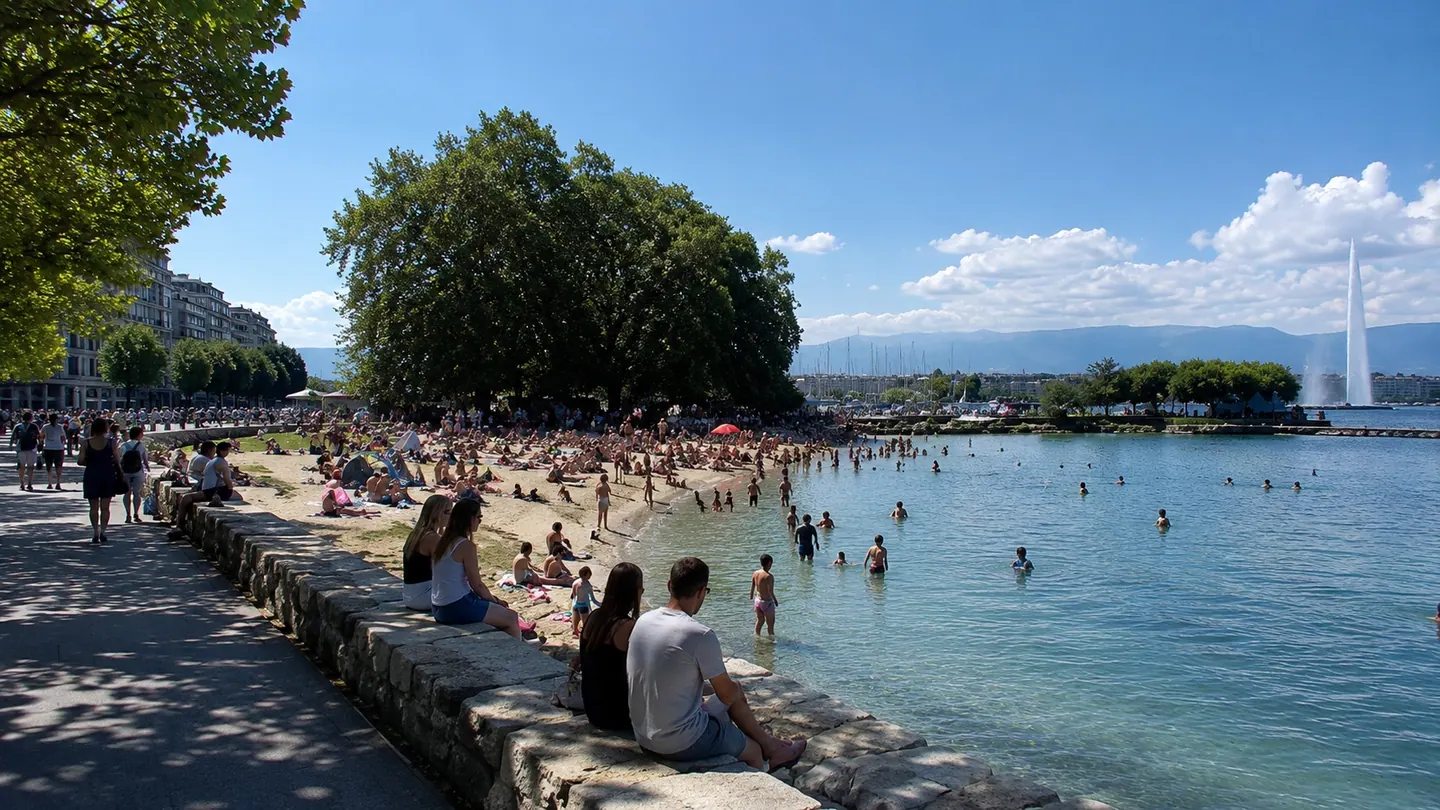
Summer in Geneva is beautiful, but it can catch newcomers by surprise. The lake becomes part of daily life, many apartments do not have air conditioning, shops still close early or on Sundays, and public transport is usually the easiest way to move around.
If you are new to Geneva, the main things to know are simple: carry water, learn the public transport system, check opening hours, use the lake safely, respect local rules, and do not assume summer here works like summer in London, Dublin, New York or Dubai.
Geneva becomes much easier once you understand its rhythm. Before that, it can feel like a city full of invisible instructions.
This guide makes those instructions visible.
Quick answer
Summer in Geneva is easy to enjoy once you understand a few local habits. The lake is part of everyday life, many public fountains offer drinkable water, and public transport is usually the simplest way to get around. Many apartments do not have air conditioning, so managing heat with shutters, fans and early-morning ventilation matters.
Newcomers should also plan around Sunday shop closures, check opening hours before travelling across town, and use established swimming spots rather than random lake access points. Geneva can be expensive, but summer also offers plenty of affordable ways to enjoy the city, including swimming, picnics, parks, free events and lakeside walks.
The fastest way to feel settled is to learn your everyday defaults: nearest tram stop, supermarket, pharmacy, public fountain, park, swimming spot and favourite cafe.
TL;DR: Summer in Geneva for newcomers
- Geneva can feel hotter than expected, especially in apartments without air conditioning.
- Public fountains are useful; look for eau potable for drinking water.
- The lake is part of everyday summer life, but use established swimming areas.
- Sundays are quiet and many shops close, so plan groceries and errands ahead.
- Public transport is usually easier than driving or parking.
- Check opening hours before crossing town, especially in July and August.
- Summer can be affordable if you use parks, swimming spots, fountains and free events.
1. Geneva gets hotter than many newcomers expect
A lot of people arrive in Geneva expecting mild Swiss weather and clean mountain air. You do get that, but you also get very hot afternoons, warm trams and apartments that can feel uncomfortable during heatwaves.
During very hot weather, avoid the strongest afternoon sun, drink regularly, and pay extra attention to children, older adults, pets and anyone with health conditions. Geneva has plenty of places to cool down, including the lake, shaded parks, public fountains, museums, libraries and cafes, but it helps to know your options before you are already overheated.
For a heat-specific plan, use the Geneva Heatwave Hub.
2. Many apartments do not have air conditioning
Air conditioning is not standard in many Geneva apartments, which surprises newcomers from warmer countries or newer cities. Even good apartments can become hot during long sunny days.
The usual local strategy is to manage the heat before it gets inside. Close shutters and blinds during the day, open windows early in the morning and late at night, use fans, and avoid cooking heavy meals when the apartment is already warm. It is not perfect, but it works better than doing nothing.
Think of it less like cooling a room and more like defending a castle.
3. Public fountains are your friend
Geneva’s public fountains are genuinely useful in summer. Many provide drinkable water, so carrying a refillable bottle is one of the easiest habits to build.
As a general rule, fountain water is usually drinkable unless there is a sign saying it is not. In French, eau potable means drinking water, while eau non potable means it is not safe to drink.
This small habit saves money, reduces plastic and stops you from paying Swiss prices for bottled water every time you leave the house.
For practical help, see Where to Find Free Drinking Water in Geneva.
4. The lake is part of daily life
In summer, Lake Geneva is not just scenery. People swim before work, after work, at lunch, with friends, with children, or alone with a towel and a book.
Popular places include Bains des Paquis, Geneve-Plage, Baby Plage and other public beaches or lake access points around the canton. If you are new, start with established swimming areas rather than jumping in from a random spot. The lake is beautiful, but it is still open water, so treat it with respect.
For a practical swimming overview, read Where to Swim in Geneva During a Heatwave.
5. Sundays are still quiet
Newcomers often get caught out by Sundays. Many shops are closed, including most supermarkets outside stations, the airport and selected convenience locations.
Plan ahead. Buy groceries on Saturday, check pharmacy opening times, and do not leave essential errands until Sunday unless you already know where to go.
Once you adjust, Sundays can become one of the nicest parts of Geneva life. The city slows down, the lake gets busy, and doing very little starts to feel like a reasonable plan rather than a failure.
6. Public transport is usually the best option
Geneva’s public transport is one of the easiest ways to move around, especially in summer when parking can be annoying and walking across town in the heat is not always fun.
The TPG network includes trams, buses and the small yellow lake boats known as mouettes. Download the TPG app and use it for live connections, routes and tickets. If you are visiting and staying in eligible accommodation, check whether you receive a Geneva Transport Card, which gives access to public transport in zone 10 during your stay.
The mouettes are especially worth trying. They are part of public transport, but they feel like a tiny lake break.
7. Check opening hours before you go
Geneva is not a city where everything stays open late just because it is summer. Some shops close earlier than newcomers expect, and smaller businesses may reduce hours or close for holidays in July and August.
Before crossing town for a cafe, clinic, shop or restaurant, check the latest opening hours. Google is useful, but it is not always perfect, especially during holiday periods.
In Geneva, “open according to Google” is a clue, not a promise.
8. Summer events are everywhere, but information is scattered
Geneva has a lot happening in summer: food festivals, outdoor cinema, music, markets, neighbourhood events, lake activities and cultural festivals. The challenge is that information is often spread across French-language pages, posters, local websites and Instagram accounts.
For newcomers, the best approach is to follow a few reliable local sources and check event details before going. You usually want to know the practical things first: when it starts, whether it is free, how to get there, whether you need tickets, and whether it works with children.
This is exactly where an English guide to Geneva helps.
If you are still working out where English is useful day to day, read Do People Speak English in Geneva? for the practical answer and the situations where French matters more.
9. Geneva is expensive, but summer can be affordable
Geneva deserves its expensive reputation, but summer gives you more ways to enjoy the city without spending much.
You can swim, picnic, walk by the lake, refill water bottles at public fountains, use public transport, sit in parks, watch the sunset, explore neighbourhoods and go to free events. A good Geneva summer evening does not always need a restaurant booking or a CHF 28 cocktail.
The expensive version of Geneva is easy to find. The affordable version takes a little local knowledge, but it exists.
10. Learn your everyday defaults early
The fastest way to feel settled is to build a few simple routines. Find your nearest supermarket, pharmacy, tram stop, public fountain, swimming spot, park, favourite cafe and easy evening walk.
You do not need to master the whole city in your first week. You just need a few reliable defaults. A city feels foreign until it has habits attached to it.
Summer is a good time to build those habits.
FAQ
Is Geneva good in summer for newcomers?
Yes. Geneva is very good in summer once you understand the local rhythm: lake swimming, public fountains, public transport, Sunday closures, early planning and heat management at home.
Do Geneva apartments usually have air conditioning?
Many Geneva apartments do not have air conditioning. Use shutters, blinds, fans, early-morning ventilation and evening airflow to manage heat.
Can you drink from public fountains in Geneva?
Many Geneva public fountains have drinkable water. Look for signs: eau potable means drinking water and eau non potable means the water is not for drinking.
Where should newcomers swim in Geneva?
Start with established swimming spots such as Bains des Paquis, Geneve-Plage, Baby Plage and other official lake access areas. Avoid random entry points until you understand the water, access and local rules.
Are shops open on Sundays in Geneva?
Most shops and supermarkets are closed on Sundays, except at places such as stations, the airport and selected convenience locations. Plan groceries and errands before Sunday.